
Berad Studio’s “Heroes” TV Commercial produced with Anthology Marketing Group for Pearlridge Center’s 2012 summer event has been nominated for two Pele Awards this year.
1. Special Effects
2. People’s Choice
The People’s Choice category is being determined by Facebook “likes” so if you have two minutes to spare, please follow this link:
VOTE HERE
to visit the Pele Awards Facebook page. Click the “LIKE” button bellow the video and “SHARE” the video with your family, friends and colleagues.
The Awards show and dinner will be held at the Royal Hawaiian Hotel Saturday, April 27. We’re looking forward to seeing everyone bedazzled and looking rad.
Berad Studio recently teamed up with Techy3 Design Studios (Hilo-based wedding video production company) to shoot “Refined by Fire” on Hawaii Island (a.k.a. The Big Island). One of the tools I knew would be helpful was a jib. However jibs are traditionally large, heavy items, not easily packed in a suitcase.
Within the last year, light, travel-friendly, cost effective jibs/cranes have exploded into the video production market, targeted directly at small video production companies.
Using a jib allows you much more range of motion than you have with a single tripod. It extends your camera’s reach and rotation both horizontally and vertically allowing you to affect the paralax whereby making camera moves much more dynamic.
Companies like Cobra Crane, Kessler Crane and Glidecam have great sturdy options to choose from, but none of them offered an option portable enough for me to hike through lava fields or up mountain trails with. (At the time of my decision making the new Kessler Pocket Jib Traveler was not announced) When I was preparing for our Big Island shoot, I knew I wanted a jib with us at all times, so size and weight were extremely important when deciding which jib to choose.
The jib that caught my eye was the Trapezist by LightCraft Workshop. I had seen tutorials on Vimeo explaining how easy and light the Trapezist was but it wasn’t until I received the package from UPS that I knew just how portable this would be.
Just like any production tool, it takes some time to figure out how to assemble, balance and use, but once you’ve mastered the technique, it’s an amazing piece of gear to own.
I’ve used this jib for both professional and personal work and I highly recommend it.
Check out this quick montage of shots we captured with the LightCraft Workshop Trapezist Jib.
When I lived in L.A., I regularly attended the NAB (National Associate of Broadcasters) Show in Las Vegas. It’s the annual product show where broadcasters, hardware and software manufacturers and production equipment vendors show off their new tools. Often featuring new cameras, recording products, NLE (Non-Linear Editing) packages (i.e. Final Cut Pro), lighting, grip and audio equipment.
Last year, NAB was flooded with products touting 4k capture/acquisition including cameras, capture cards, displays etc, but the one product no one expected that stood out in the crowd was the Blackmagic Cinema camera. A camera that shot 2k RAW and ProRes422 compressed images for $2995.
I like to rent equipment before deciding whether or not to invest in owning one especially when deciding on hardware costing thousands of dollars. Luckily, I was able to rent a Blackmagic Cinema Camera from Hawaii Photo Rental for a short documentary I recently shot on the Big Island of Hawaii for Hawaiian Airlines.
Check out the project here: Refined by Fire
Camera specs and online video examples are great, but it’s always preferable to see how a camera actually functions for you. I often have assignments that require me to capture shots quickly and inconspicuously, so having a light and nimble camera is essential, as is being able to operate it by myself. Also, I regularly shoot with multiple cameras including the Sony FS100 and Canon 5DmkIII, so I need to make sure that I can acquire images that will compliment the other cameras. This documentary project was a great real life project to test the three cameras side by side and compare image quality and usability.
The amount of technology Blackmagic crammed into their body, only slightly larger than a DSLR is/was amazing. Allowing users to record 12-bit RAW or ProRes directly to SSD cards in a rugged metal body, with sturdy professional audio inputs and a large on-camera display was a huge feat, but I still decided to hold off on the buying it.
After shooting with my FS100 and Canon DSLRs over the years, the sensor size was just a little too small for my liking. Low light footage resulted in grainy images compared to the high ISO captures on my 5DmkIII and FS100 and getting lenses to compliment it was rather difficult. I know many love it, but I decided to hold off for version II.
And YES version II is finally here!
The new Blackmagic Production Camera 4k has been announced and it a giant step in the right direction for this company. Here are some of the specs:
• 4k or Ultra HD TV recording
• Super 35 Sensor
• Global Shutter
• CinemaDNG RAW or ProRes422 (HQ) file recording
• Built in touchscreen monitor
• EF mount optics
• Records to SSD
• 4k 6G-SDI technology
• $3,995
• Available in July
If that wasn’t enough. They’ve also introduced a second camera today: the Blackmagic Pocket Cinema Camera. Here are some of the specs:
• Pocket Sized Body
• Super 16 sensor
• 13 stops of Dynamic Range
• Micro Four Thirds™ lens mount
• Records to SD Card
• CinemaDNG RAW or ProRes422 (HQ) file recording
• $995
• Available in July
I’m guessing this is just the first of many great announcements at NAB this year, but this is the one I’ve been waiting for!
My video production company Berad Studio recently produced a documentary called “Refined by Fire” for Hawaiian Airlines’ in-flight video magazine Hawaiian Skies. What made this piece more challenging than previous short films was the travel involved.
Specifically we traveled to Hawaii Island (a.k.a. The Big Island) to interview artisan Clayton Amemiya. Clayton is a potter who has been perfecting a traditional, Japanese form of pottery known as Anagama pottery. The major difference between this and all other forms of ceramics is the Anagama (wood) kiln in which pieces are fired. The process of building and maintaining this fire is typically an 80 – 100 hour process that continues day and night until the firing process is complete. The flame and wood ash act as a natural glazing agent for the raw, unglazed clay ceramics that are inserted into the Anagama.
When traveling for production the first question that always arises is: “What equipment and personnel do I need?” For this piece instead of bringing a crew with me, I decided to reach out to a local wedding production company called Techy3 Studios. Knowing that they shoot weddings with Canon 5DmkIII DSLR cameras, I felt confident that they would compose nice, properly exposed shots in tight time constraints.
I did consider flying a crew up to shoot with me, but in the end chose to utilize a local production team for a 5 key reasons.
1. Cost: Budget didn’t allow for extra plane tickets, lodging and meals.
2. Gear: Techy3 owned a bunch of the larger gear needed which allowed me to pack light.
3. Local Knowledge: Research and past experience only get you so far. An actual person can give you accurate weather updates and location information that Google Earth just can’t provide. Also, if I had to GPS or map out driving instructions to every location, it would have added unnecessary amounts of time and backtracking that a local can scout beforehand.
4. Weather: In Hawaii and specifically on the Big Island weather patterns vary so much that it’s invaluable to have people who live there help determine when to get to each location for ideal shooting conditions.
5. Growth: Trust is a huge component to production. You need to know your DP (Director of Photography) is going to nail focus, and exposure. You need to be confident that your audio tech is capturing clean, usable audio. As the director or producer you should focus as much energy as possible on what’s most important: TELLING THE STORY.
As I mentioned, I was able to pack just what I needed which included 3 cameras, a set of Zeiss prime lenses and a few Canon and Tokina zooms. Hawaii Photo Rental had just received their brand new Blackmagic Cinema Camera (BMCC) so I was itching to take it for a test drive. I thought this would be a great project to test how well it would cut with my Sony FS100 and Canon 5DmkIII. I knew that lenses wouldn’t be a problem since the BMCC is designed to work with Canon lenses but I knew that battery life would be. We decided to shoot everywhere from the lava fields at Kalapana to the peak of Mauna Kea and since the internal BMCC battery has a limited run time of 60-90 minutes, I needed to figure out an external power solution. Luckily fellow filmmaker Gerard Elmore had also just received his Blackmagic Camera and loaned me his Switronix-PB70-BMCC battery for our weekend shoot.
For my camera support I brought a carbon fiber Gitzo Tripod with a Manfrotto 503 Head, a Manfrotto 561BHDV Monopod and my brand new Lightcraft Workshop Trapezist Jib which all fit into my Manfrotto tripod bag. Lighting, stands, sliders other gear and even transportation were all provided by Techy3 Studios which made it much easier for me to travel safely and on my own.
It was a very fast paced shoot. I landed in Hilo on Friday morning at 7:00AM, ate breakfast with the Techy3 gang and we were shooting at our first location by 8:30AM. We dropped off any unneeded gear and luggage and darted off to Kalapana and hiked for a few miles to capture the lava flow. We got so close that at times we could see the red glow of lava under our feet.
Most of the interviews were shot on day 2 as was the time-lapse footage up at the peak of Mauna Kea. Two things to keep in mind if you plan to shoot at the summit:
1. You should plan to rest at Visitor Information Station to allow your body to acclimate to the altitude change for around 30 minutes.
2. A good portion of the road on your way up to the summit is unpaved and thus a 4-wheel drive vehicle is required to get there.
I don’t advise driving up to the peak during high wind weather, but if it’s the only day available, then bring a very sturdy tripod, some sandbags to weigh your camera down, winter weather clothes and blankets to keep warm. When we neared the summit, we noticed the car’s external thermometer drop passed 29° and on the rest of the trip up, it just read ICE so we don’t know exactly how cold it was.
The Anagama fire needs to be monitored and stoked 24 hours a day until it reaches it’s peak temperature over 1000°C, so when we came down from the summit, we went straight to Clayton’s house to shoot B-Roll of the Anagama at night.
Day 3 was reserved for our primary interview with Clayton as well as shooting any last B-Roll we needed.
We had just enough time to grab one last meal in Hilo town before jumping on my flight back to Oahu to begin post production.
Special Thanks to:
Hawaiian Airlines
Anthology Marketing Group
Clayton Amemiya
Techy3 Studios
Stephen Fredman
Gerard Elmore
Hawaii Photo Rental
Raf Bacani
Hawaii Film Office
Light Craft Workshop
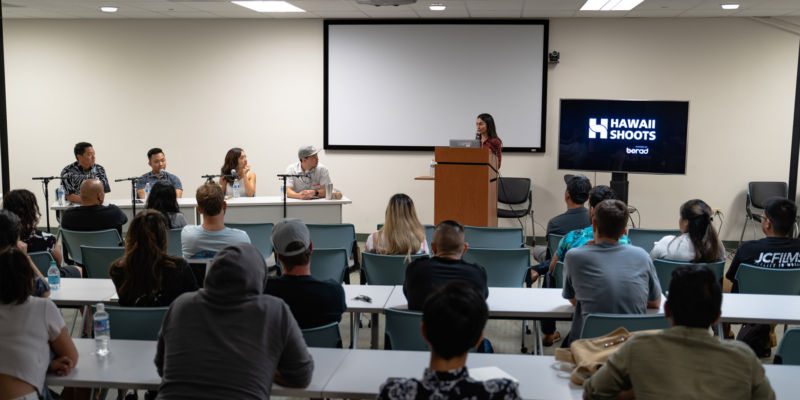
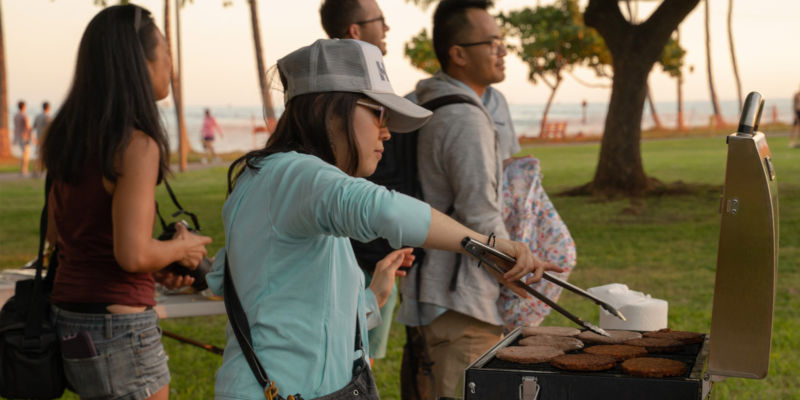
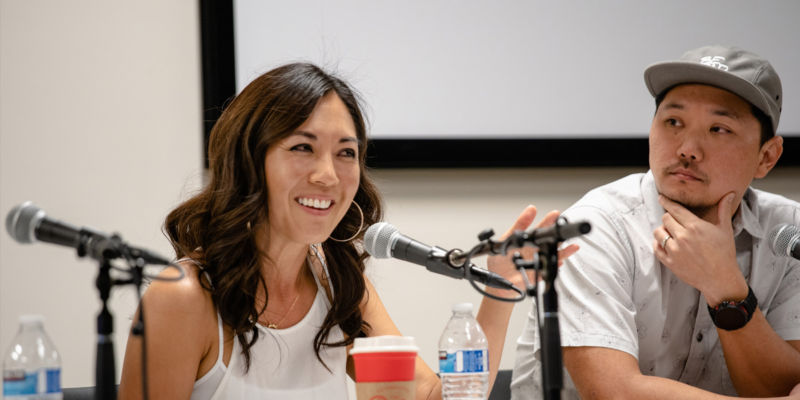
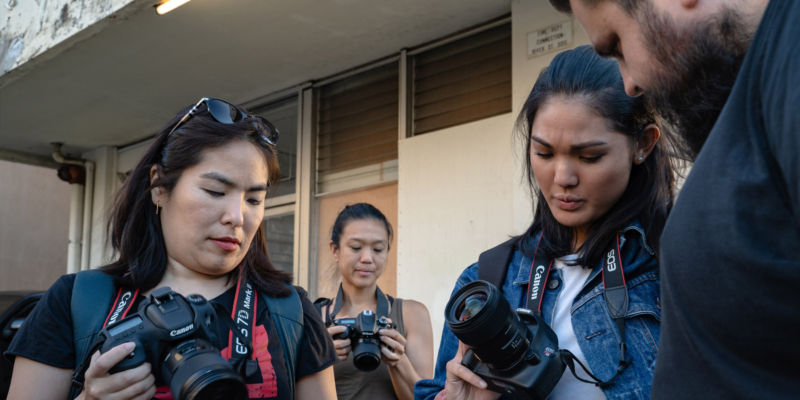
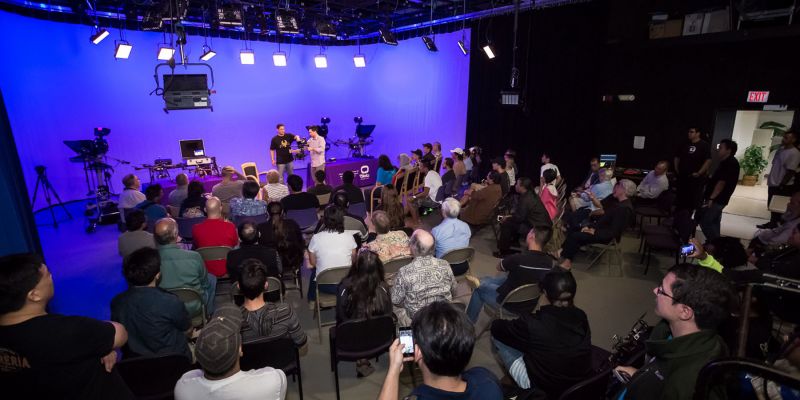
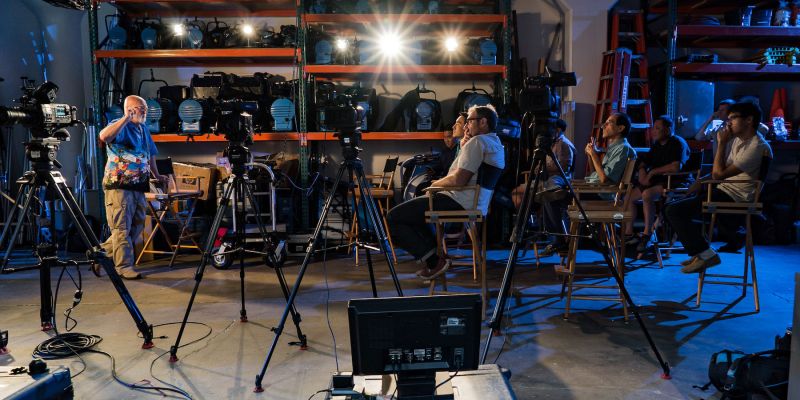
We had a blast hanging out, chatting and playing with fun toys at our last event.
Big mahalo to Banzai Media and Enlight Studios for loaning us your RED Scarlet again for the night.
Thank you to Berad Studio for coordinating everything and bringing out an FS100, and the lighting kit.
It was nice meeting Yen of Gogobot Hawaii
Mahalo as always to Doc and HQ HNL for hosting our event. Looking forward to our next event in April.
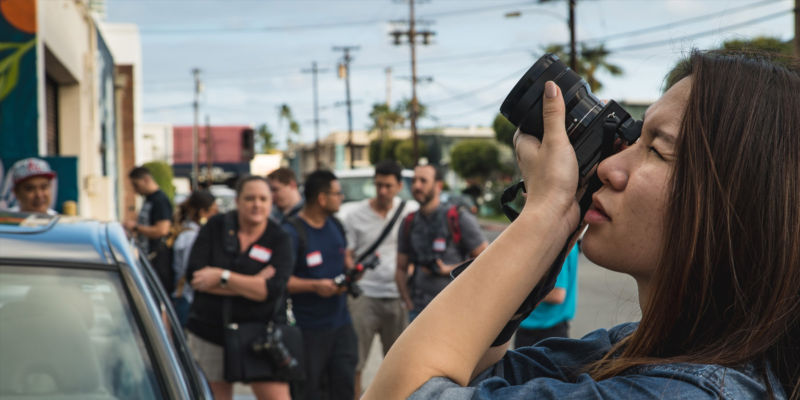
Come hangout with some of Hawaii’s top HDSLR shooters. Bring your questions, answers and maybe a favorite piece of gear that you’d like to share and come on over.
And as always, we’ll have some cool toys to play with.
Courtesy of Banzai Mike we’ll have a RED Scarlet in the house to demo.
What: Business Talk
When: Wednesday | February 20, 2013 | 7:00-9:00pm
Where: HQHNL | hqhnl.com
Big Mahalo to our guest speaker Jason Suapaia of 1013 Intergrated (formerly Pacific Focus) for sharing his 20 years of business experience in the Hawaii video production industry.
Jason began his video production career as a tape operator in the Pacific Focus machine room at night while also working another day job. He worked his way up from running tape dubs to running the entire company as a partner and president. Being the president of the state’s largest production company, Jason has learned a lot not just about the technical aspects of being on set or in an edit, but even more importantly, how to build and run a sustainable business.
When I first got into the production side of things, I knew that there were hardware costs like cameras, lenses, lights and computers, but there are so many other factors involved in running a business. Jason discussed everything from business insurance and film permits to craft service and customer service.
Some of the key points discussed were:
1. Budgets Estimates and Rates
2. Customer Service
3. Professionalism
4. Caring for your Crew and Vendors
5. Accounting
As always, we had some toys to play with. Thank you to Banzai Media for loaning us your RED Scarlet for the night to play with and Enlight Studios for shooting event coverage of the night.
And thank you to Berad Studio for bringing out your Sony FS100 and Canon 5DmkIII cameras.
Mahalo as always to HQ HNL for hosting our event. Looking forward to the next one in March.
In Hawaii it’s hard to find work in the video production industry… Really hard. After working in LA for 6 years, I thought it would be pretty easy to find a job when I moved back to Hawaii, but for me… it never happened. After a few years of freelancing on projects, I decided to start my own company and Berad Studio was born.
It was a great idea in theory but I quickly ran into some problems: though I knew about doing production, I had no idea how to run a sustainable and successful video production business. Tax implications, expense reports, W9′s, 1099′s, production insurance… There were so many things I hadn’t considered when I decided to build Berad Studio.
At our next event, Jason Suapaia (President of 1013 Intergrated) will be giving a presentation on what it takes to operate a video production company. We’ll discuss some fundamental principals of video production business like location permiting and budgeting as well as dig into technology and innovation.
It’s definitely going to be an awesome conversation.
And as always, we’ll have some cool toys to play with.
Courtesy of Banzai Mike we’ll have a RED Scarlet in the house to demo.
What: Business Talk
When: Wednesday | February 20, 2013 | 7:00-9:00pm
Where: HQHNL | hqhnl.com
When you’re burning daylight shooting on location, the words “We’ll fix it in post” are often uttered. Post production is really undervalued and often not budgeted properly into smaller projects, but there is a great deal of value and investment in a good system.
What NLE (Non-Linear Editing) software are you using? Final Cut Pro 7, Final Cut Pro X, Sony Vegas, AVID or Adobe Premiere? What types of drives are you using? Have you invested in a centralized R.A.I.D. system? How do you back up and archive your data?
We’ll be discussing all this and more on Thursday, January 10 at HQHNL (Formerly The Greenhouse Innovation Hub) in Kakaako, Hawaii.
What: HDSLR Meetup: Hardware, Software, Data Storage & Backup Discussion
When: Thursday | January 10, 2013 | 7:00-9:00pm
Where: HQHNL | hqhnl.com
In this age of digital video and film production, we are constantly being pushed to learn new and innovative ways to tell stories and capture light. As budgets and timelines shrink, we are forced to figure out faster and more effective ways to get shots accomplished. It can quickly become very costly if you spend good money on the wrong tools.
There are now more manufacturers than ever making new and innovative tools for all of us in the production industry. Earlier this year I received a Pico Dolly from Photography & Cinema to experiment with, but I’ve only recently had much opportunity to use it. I love how these smaller companies are breaking to mold of large equipment (dolly and track system) and shrinking them down (in size and price) to meet the needs smaller cameras and budgets.
I typically bring my Cinevate Altas 10 on set, but there have been a few instances when I just couldn’t get it set up properly. Either there wasn’t enough room to setup a sturdy tripod to mount it on, or the slider track was visible in my shot. That’s where something like the Pico Dolly is an ideal solution. Because it doesn’t sit on a track, there’s nothing to interfere with your shot and it can then glide on any smooth surface available.
On a recent shoot in a small Honolulu office, I utilized the Pico Dolly to achieve a subtle moving shots on a desk. The dolly simply glided along the desktop, without the need for a tripod or rails. It also doubled as a hi-hat for stationary table top and floor shots. I didn’t use my tripod at all the whole day.
I also used the Pico Dolly on a project earlier this year for Startup Weekend Honolulu. Because The Greenhouse: Innovation Hub was packed full of people and chairs, there was no way for me to use a traditional slider or dolly in the space allotted. Instead, I ran the tiny Pico Dolly across the 8 foot stage floor to give movement to my time-lapse.
The Pico Dolly is a compact and versatile tool that would be a great addition to any production kit. At a mere $100 for the dolly, ball head and carrying pouch, it’s a really cost effective way to give movement to your shots.